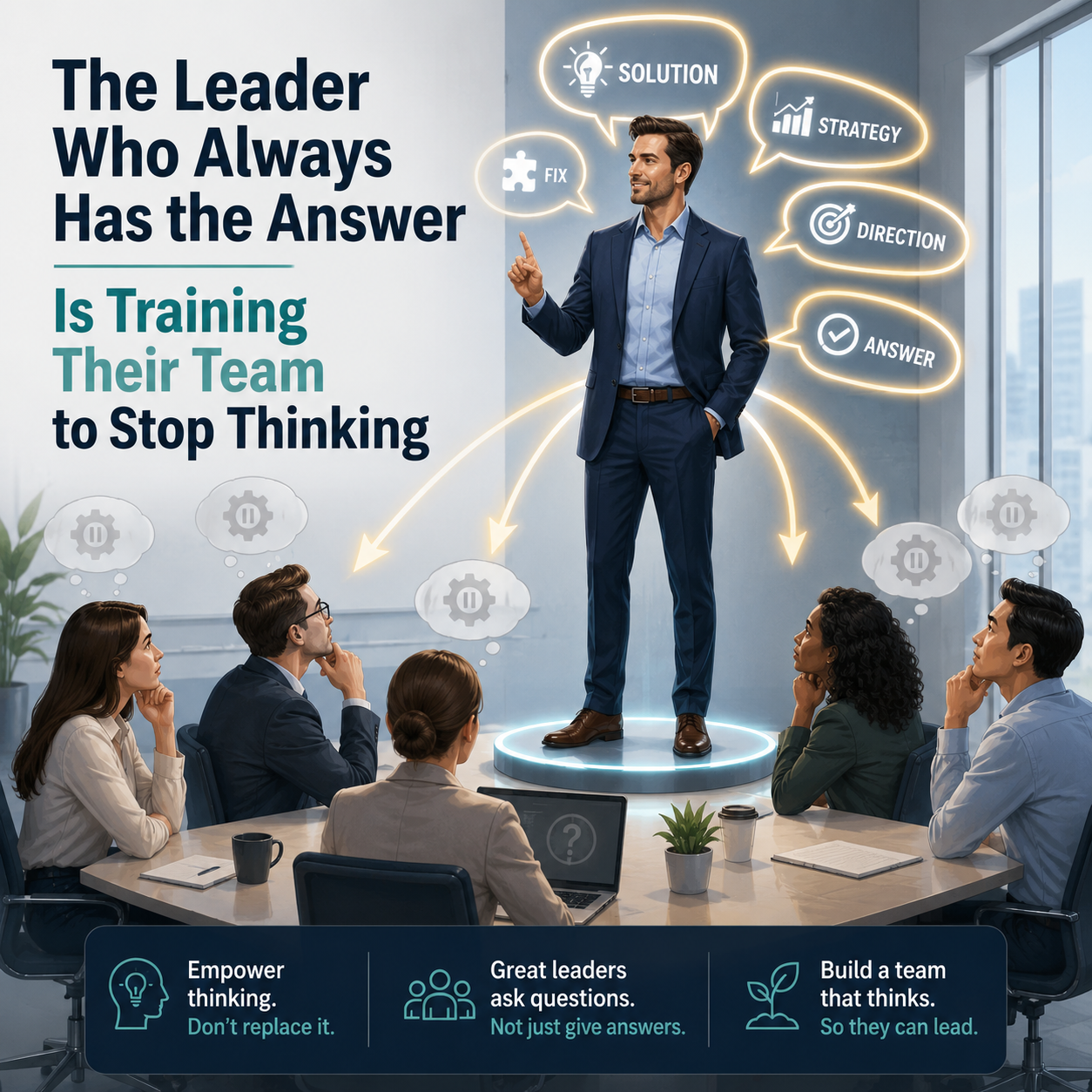
I recently came across a post on LinkedIn that stopped me in my tracks, it was not so much the post but one of the responses and one specific line that they wrote: “The leader who always supplies the answer can accidentally train the team to stop thinking.” (source)
It resonated deeply because I’ve seen both sides of this dynamic. Early in my career, I thought leadership meant having the right answer to every question. But over time, particularly during my tenure at Pagefreezer, I realized that my most impactful work wasn’t solving problems—it was removing the obstacles that prevented my team from solving them themselves.
The Trap of the “Expert” Manager
For many new managers, especially those promoted from individual contributor roles, there’s an implicit pressure to prove their worth by knowing more than everyone else. It feels safe. If you have the answer, you’re valuable. If you don’t, you’re exposed.
But this “expert” model creates a dangerous dependency. When a manager becomes the primary source of solutions, the team stops exercising their own problem-solving muscles. They wait for direction rather than taking initiative. The result? Stagnation. Innovation dies because no one feels empowered to chart a new course.
And perhaps most critically, it drives away your best people. High performers crave autonomy. They want to own their work, make decisions, and see the impact of their ideas. When they’re treated as order-takers rather than partners, they leave. I’ve seen burnout set in not just from workload, but from the frustration of having one’s potential capped by a leader who won’t step back.
From Bottleneck to Enabler
At Pagefreezer, our structure was deliberately decentralized. My role wasn’t to approve every decision or solve every technical challenge. It was to ensure my team had the tools, resources, and clarity they needed to do their best work. I focused on clearing pathblocks—whether that was securing budget, aligning with other departments, or simply protecting their time from unnecessary meetings.
This shift from “manager” to “leader” isn’t just semantic. It’s a fundamental change in where you invest your energy. Instead of hoarding information, you distribute it. Instead of providing answers, you ask better questions. Instead of controlling outcomes, you create the conditions for success.
Navigating the Resistance
Of course, this transition isn’t seamless. Managers often feel vulnerable when they don’t have all the answers. Teams, accustomed to being told what to do, may initially hesitate to take ownership. There’s a comfort in dependency, even if it’s limiting.
To bridge this gap, leaders must cultivate psychological safety. Make it clear that experimentation is encouraged and that mistakes are learning opportunities, not failures. When a team member brings you a problem, resist the urge to solve it. Instead, ask: “What have you tried so far?” or “What do you think is the best next step?”
Celebrate when your team solves problems without you. Reinforce the behavior you want to see. Over time, the dynamic shifts. The team becomes more confident, more creative, and more resilient. And you, as the leader, free up capacity to focus on strategic initiatives rather than tactical firefighting.
The Call to Lead Differently
If you’re a leader reading this, I challenge you to identify one area this week where you can step back. Maybe it’s a recurring meeting where you usually dominate the conversation. Maybe it’s a project where you’ve been the default decision-maker.
Delegate not just the task, but the ownership. Ask questions instead of giving answers. Remove an obstacle instead of providing a solution.
Leadership in 2026 isn’t about being the smartest person in the room. It’s about making sure everyone else in the room feels empowered to be their smartest selves.
About The Author