 You know the feeling. You sit at your computer, cursor blinking in the “Experience” field of a job application. You have the skills. You have the resume. But your hands won’t move. Hours pass.
The sun goes down. You haven’t applied for a single thing.
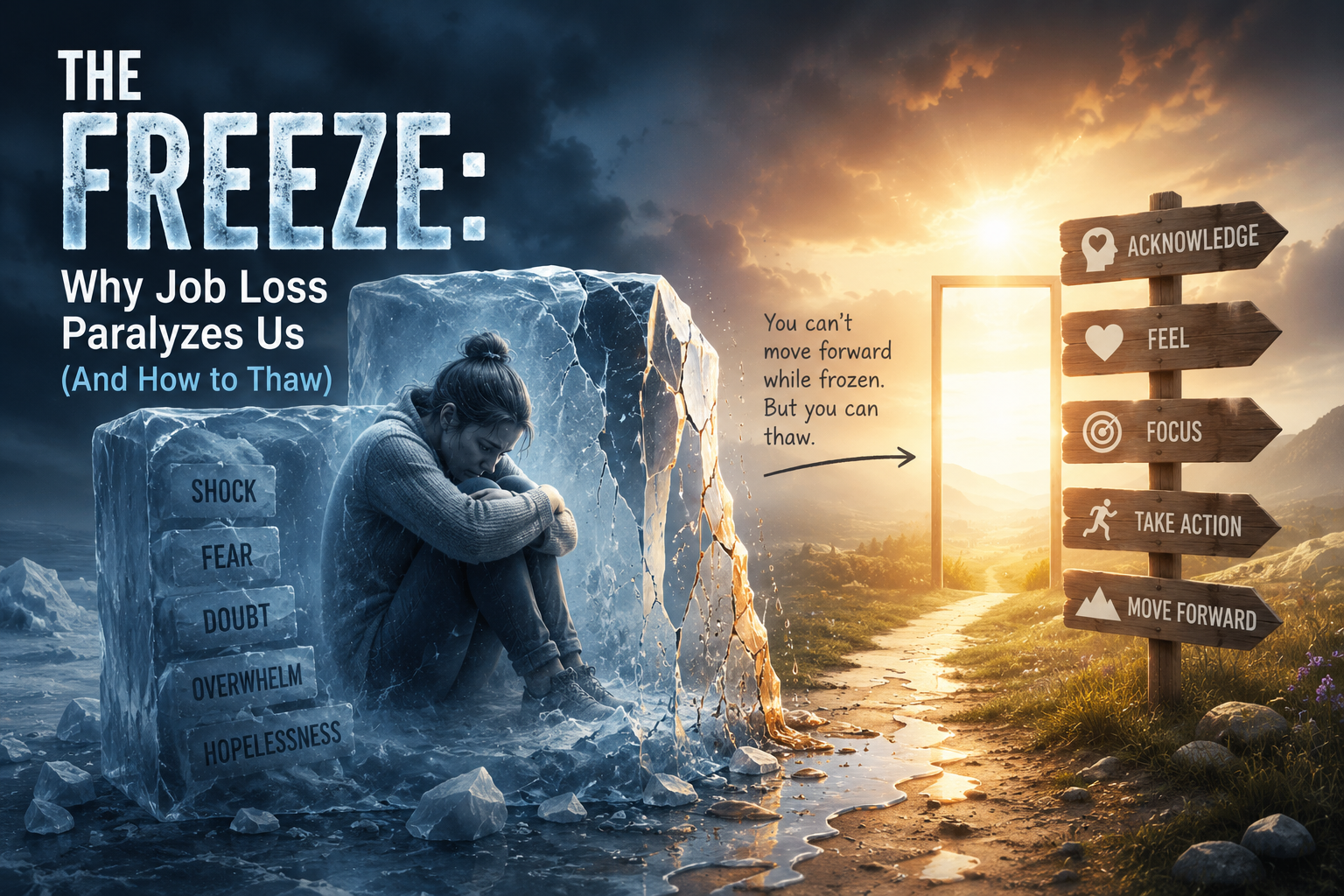
You aren’t lazy. You aren’t broken. You are frozen.
In a recent discussion on r/careerguidance (Reddit) titled “Has anyone ever felt completely frozen after losing a job?”, hundreds of professionals confessed to this exact state. It is the silent crisis of unemployment: the gap between needing to work and being physically/mentally unable to do so.
If you are reading this while stuck in that freeze, here is what the community, and the science of career transition, wants you to know.
1. The Freeze is a Trauma Response, Not a Character Flaw
When we lose a job, especially one we built over years, we don’t just lose income; we lose our social anchor. One user, u/chromedshadowstack, described losing their role as VP of Customer Operations, a “dream job”, and feeling entirely untethered:
“All came crashing down about two years ago… I was going through a divorce and I’ve got two kids going through [and close to finishing university]… Do I retire early? Or do I keep going?… I was losing self-confidence – could I do that job again? Who would hire me?”
The Insight: Your brain perceives job loss as a threat to survival. The “freeze” is your nervous system hitting the emergency brake. As u/Decent-Flight-9328 noted, they sat in their apartment staring at a wall for months after losing a 6-year tenure. This isn’t procrastination; it’s grief processing.
Ask Yourself: Am I judging myself for not being “productive” enough during a period where my brain is actually trying to protect me?
2. Momentum Beats Motivation (The “One Thing” Rule)
Waiting until you “feel ready” is the trap. Confidence doesn’t precede action; it follows it. The most repeated advice in the thread was to shrink the goal until it’s impossible to fail.
u/Unlikely_Diver_5773 shared a pivotal shift:
“For me, momentum came before confidence. I stopped worrying about the perfect next step and focused on one small action every day. Confidence started coming back once I had a few wins under my belt.”
u/decent-soup1270 reinforced this with a strategy that worked for them:
“Stop waiting to believe in yourself before you act. It runs the other way. You take one small real action, and the confidence follows the evidence… Start the next step until it’s small enough that you can’t talk yourself out of it.”
Actionable Step: Don’t aim to “find a job” today. Aim to update one bullet point on your LinkedIn. Or send one networking message. Prove to your brain that you are safe to move.
3. Structure is Your External Skeleton
When the external structure of a 9-to-5 vanishes, internal chaos often fills the void. Several users credited their recovery to rebuilding a routine, even when unemployed.
u/samurai_sound wrote:
“Create a new routine. When I get laid off I would get up early and go to the gym/sauna every morning… I helped immensely with the stress relief. Within 3 months I was working again.”
u/RealisticWinter650 added:
“Build yourself a routine and stick to it like a job… Get up same time every weekday, go to bed at a decent schedule.”
Why This Matters: Routine reduces decision fatigue. When you don’t have to decide when to wake up or what to do first, you preserve mental energy for the hard emotional work of job searching.
4. Reframe the Narrative: From “Lost Time” to “Data Gathering”
The shame of the gap is heavy. u/Past-Dingo-9008 expressed the pain of a 7-month search: “I’ve been trying to land a job for at least 7 months. It’s been a brutal 2.5 years of depression, shrinking savings…”
But notice how u/chromedshadowstack reframed their own journey after breaking the freeze?
They didn’t just find a job; they found a better alignment. They moved from corporate burnout to boutique consulting, realizing:
“I know what I’m doing and when I get into a room with business owners they stop and listen to what I’m saying.”
The freeze wasn’t wasted time. It was the necessary pause that forced a pivot toward something sustainable.
A Question for You
If you are currently frozen, try this check-in:
- What is the smallest possible action I can take right now that would make me feel 1% less stuck?
- If a friend told me they were feeling this paralyzed, would I call them lazy, or would I tell them to be gentle with themselves?
The thaw begins not with a grand leap, but with a single, tiny movement. Be patient with your freeze. It’s protecting you. But when you’re ready, trust that action creates the confidence you’re waiting for.
About The Author

This was a very helpful read. Thanks for sharing it 🙂