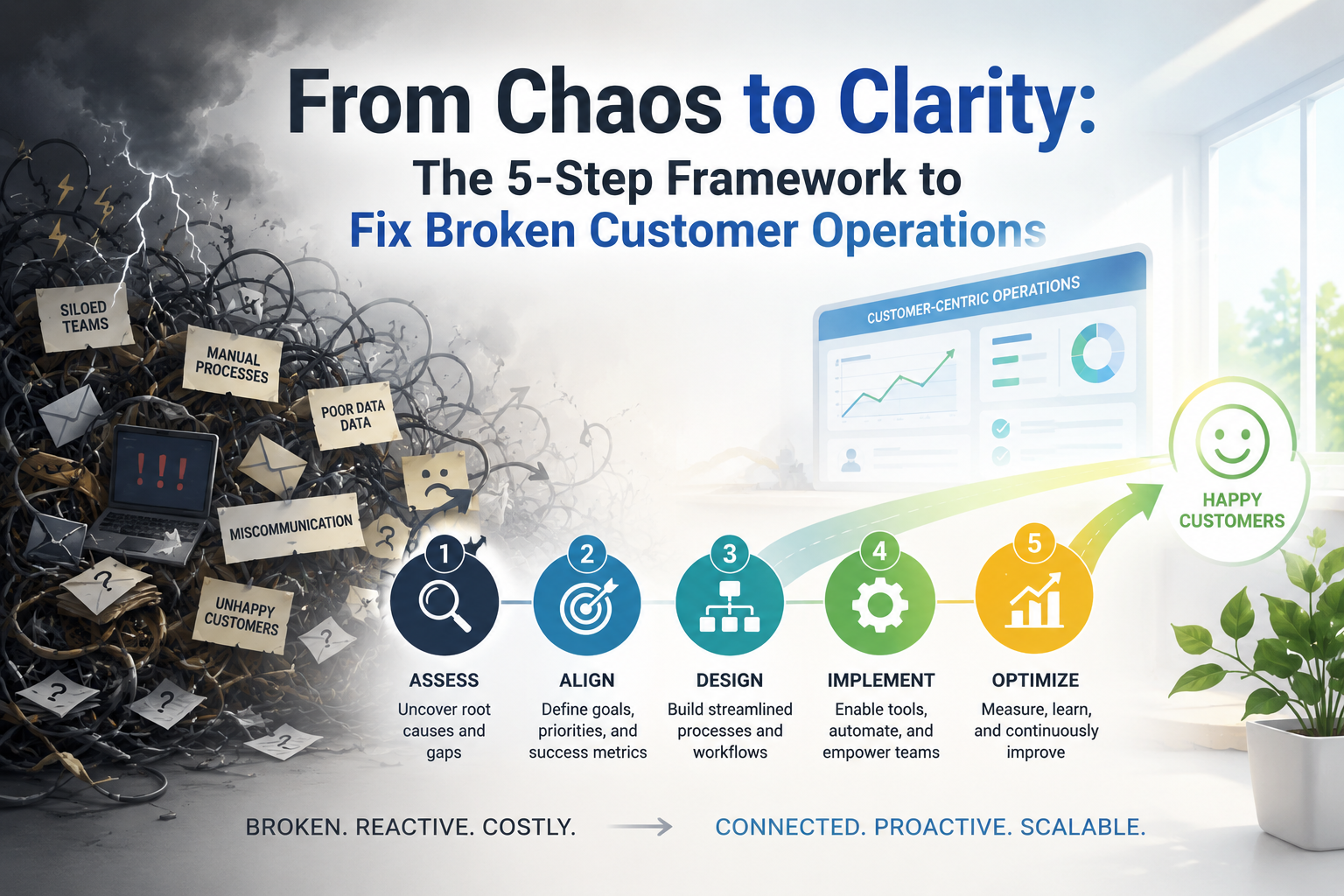
 It’s 8:00 AM on a Monday. You walk into the office, coffee in hand, ready to tackle the week’s strategic priorities. But before you even sit down, your inbox is already flashing red. Dozens of escalations from the weekend. Critical system alerts. Angry emails from key merchants.
You walk onto the support floor, and the vibe is heavy. The phones haven’t even started ringing yet, but you can already hear the stress in the air. Agents are huddled over their desks, dreading the day ahead. They aren’t thinking about how to delight customers; they’re just trying to survive the chaos.
If this sounds familiar, you aren’t alone. Most customer operations teams are stuck in a cycle of “flying blind.” They are so busy putting out fires that they never have time to figure out why the building keeps catching fire.
But there is a hidden cost to this chaos that goes beyond lost revenue. When your team is constantly reacting, they burn out. They stop looking for root causes and start just “going through the motions.” And as long as your team is drowning in callbacks and escalations, they can’t tell you what the customer actually wants next. A support team that isn’t busy putting out fires is a support team that is finally free to drive product improvements and customer loyalty.
The Turning Point: When “Hard Work” Isn’t Enough
I learned this the hard way during my time as Director of Customer Support & Field Operations.
For months, I was working 50 to 70 hours a week, personally jumping into escalations and trying to keep the ship afloat. Our KPIs were terrible. We had a call abandon rate hovering around 30% because our agents were too busy making outbound callbacks to answer new incoming calls.
We were an inbound call center, but we were spending more time chasing merchants than helping them. The activation process for our Point-of-Sale products was a “HUGE black box”, nobody on the support team truly understood how it worked, and nobody knew how our retailers were actually using the product.
I realized that no amount of overtime was going to fix a broken system. We needed a map. We needed to find the signal in the noise. That’s when we developed what I now call the Signal to Noise Framework.
Step 1: Map the Black Box
The first step was to stop guessing and start mapping. We traced the entire customer journey from three perspectives: the end-user buying the product, the merchant activating it at the register, and our internal systems processing that activation. By visualizing every touchpoint, we identified exactly where the “black box” was causing confusion and errors.
Step 2: Categorize the Noise
Once we had the map, we looked at the thousands of tickets coming in. We stopped treating every call as a unique emergency and started categorizing them. We found that most issues fell into four buckets: Product Activation, Hardware failures, Connectivity issues, and User Error. This allowed us to see patterns instead of just individual problems.
Step 3: Shift the Dynamic
We realized our promise of “we’ll call you back” was actually hurting us. It created a bottleneck of outbound calls that kept agents off the phones, leading to that 30% abandon rate. We shifted the dynamic by empowering agents to reframe the issue. Instead of promising a callback for every minor glitch, we gave them the knowledge to help the merchant troubleshoot in real-time or confidently ask the merchant to call back if the issue persisted. This immediately freed up our lines.
Step 4: Tune the Signal
To make sure this new approach stuck, we implemented a 32-point Quality Assurance (QA) program. This wasn’t about policing agents; it was about giving them a checklist for success. We started recording calls and listening for specific behaviors: Were they asking the right diagnostic questions? Were they following the new troubleshooting paths? This turned our QA from a “gotcha” tool into a coaching tool that helped agents cut through the noise and identify root causes faster.
Step 5: Bridge the Silos
This was the most critical step. Historically, Engineering viewed Support as just “the complaint department.” But because our agents were now asking intelligent, data-driven questions based on our QA findings, we could speak Engineering’s language. We sat down with the technical teams to deep-dive into specific activation failures, like those with our pre-paid Visa and MC products. By bridging this silo, we didn’t just fix individual tickets; we fixed the actual bugs in the system.
The Result: From Chaos to Clarity
The change was immediate. Outbound calls dropped significantly, and our inbound capacity increased. But the biggest win wasn’t just the metrics—it was the culture.
Our agents were relieved. They no longer had to deal with aggravated customers on outbound callbacks. Because they understood the “why” behind the issues, they felt confident in their answers. They could distinguish between a user error and a genuine system failure, meaning they only escalated when it truly mattered. They went from being exhausted fire-fighters to becoming trusted technical partners for our merchants.
The impact of the Signal to Noise Framework was immediate and measurable:
-
- Massive Scale: We increased our capacity from handling a few hundred calls daily to over 9,000 calls per month without adding a single new headcount.
- Improved Accessibility: Our call abandon rate dropped by over 30%, ensuring merchants could actually reach us when they needed help.
- Higher Quality Interactions: Through the 32-point QA program, agent scores consistently stayed in the +90% range, and First Call Resolution (FCR) climbed to over 80%.
- Operational Savings: By eliminating unnecessary outbound callbacks and improving efficiency, we saved approximately 1,500+ hours of agent time per month. At an average rate of $20/hour, this translated to roughly $30,000 in monthly operational savings, all while keeping agents on standard 40-hour workweeks.
- Bridging the Silos: The data gathered by our support team allowed our Technical Operations (TECHOPS) group to implement additional checks in their automated monitoring. This helped them catch new edge cases proactively, reducing future system failures before they impacted merchants.
- Cultural Transformation: The biggest win wasn’t just the data, it was the relief. Agents stopped escalating every minor issue out of fear. They felt confident, valued, and empowered. This shift was evident in the surge of positive merchant commendations, proving that when you give a team the right map, they don’t just solve problems, they build relationships.
The Signal to Noise Cheat Sheet: 5 Steps to Uncover Pain Points Today
- Map the Black Box: Don’t just look at your support tickets; look at the entire journey. Trace the path from the customer’s first interaction to your internal processing. If you don’t understand every step of that process, neither will your team—and that’s where the pain points hide.
- Categorize the Noise: Stop treating every ticket as a unique emergency. Group your issues into broad categories (e.g., Hardware, Connectivity, User Error). When you see patterns instead of isolated incidents, you can stop reacting and start solving.
- Shift the Dynamic: Analyze why your team is making outbound calls. Are they chasing customers because they lack the confidence to solve the issue in real-time? Empower your agents to reframe the conversation so they aren’t stuck in a cycle of callbacks that leads to high abandon rates.
- Tune the Signal: Implement a QA program that focuses on process, not just personality. Use call recordings and a simple checklist to ensure agents are asking the right diagnostic questions. This turns your support team into a data-gathering engine for root-cause analysis.
- Bridge the Silos: Use the insights from your QA program to speak Engineering’s language. When Support can provide specific, technical feedback on product failures, you transform from “the complaint department” into a strategic partner that helps fix the source of the pain.
Stop Rewarding the Fire-Fighting
As leaders, we often inadvertently reward the people who work the hardest to put out fires. We praise the hero who stays late to fix a crisis. But that crisis shouldn’t have happened in the first place.
Your team didn’t sign up to be human shields for broken processes. As long as they are drowning in reactive work, they can’t provide the insights you need to grow your business.
Stop rewarding your team for putting out fires, and start giving them the map to prevent them.
Keywords: Customer Support, Customer Experience, Operational Excellence, Process Improvement, Leadership
This post will teach you…
- How to reduce customer support call abandon rates
- Framework for uncovering hidden customer pain points
- Strategies to reduce customer support agent burnout
- How to bridge the gap between customer support and engineering
- Improving customer operations efficiency in high-volume call centers
- Steps to map the customer journey for technical products
- How to implement a quality assurance program for customer support
- Reducing outbound customer service callbacks
- Turning customer support into a strategic business partner
- Tdentifying root causes of customer escalations
About The Author